

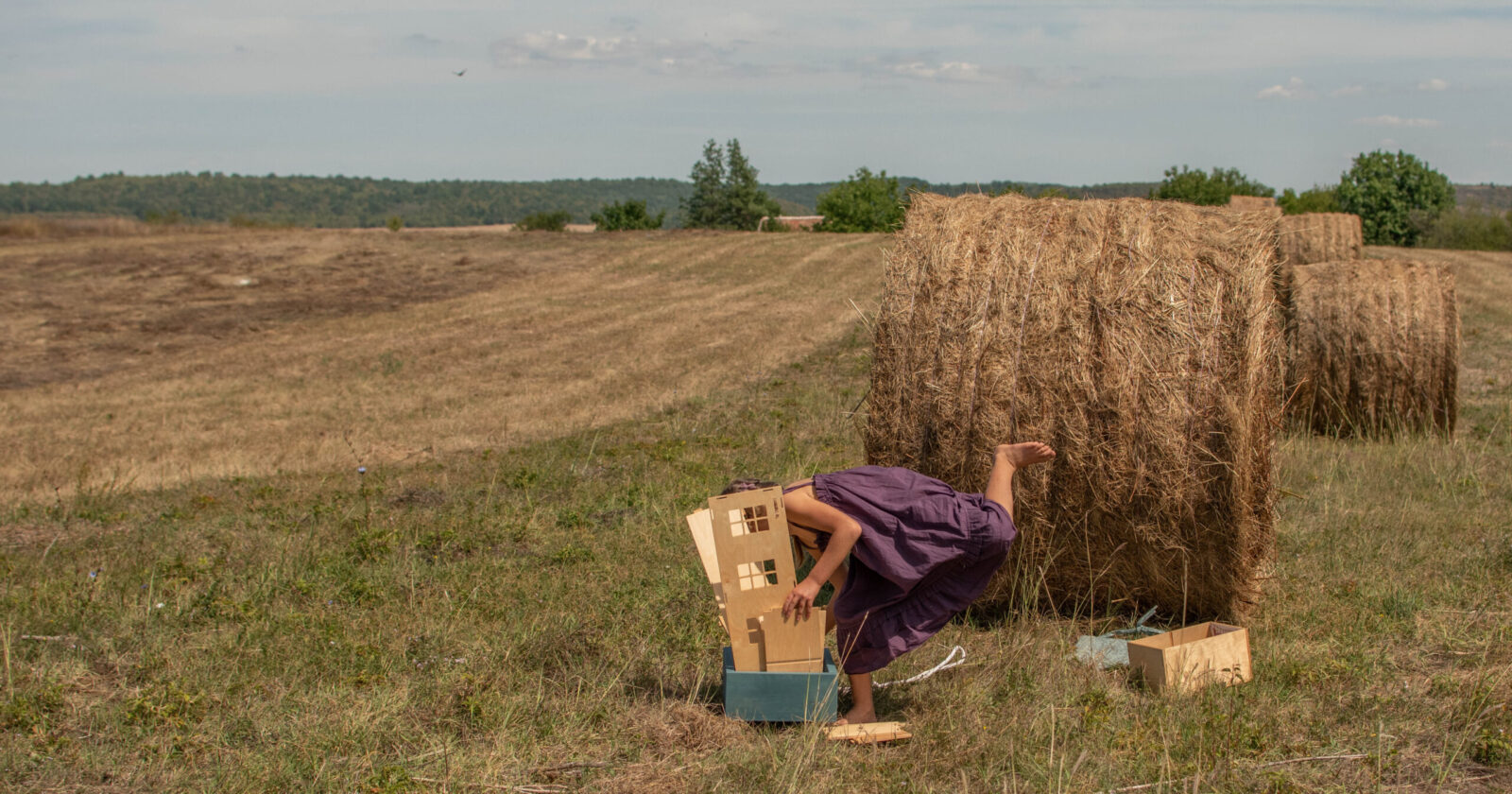
You might be wondering: is a dollhouse really worth it? With all the toys competing for attention, what makes this particular play experience special?
Let me share what I’ve observed over years of watching children play. Dollhouse play offers something rare and valuable – a contained world where children have complete control, endless possibilities, and room to grow in ways that might surprise you.
And yes, I’m talking about all children – whether they’re filling their dollhouse with families, farm animals, racing cars, dinosaurs, or anything else their imagination dreams up.
A Home for Their Whole World
Children form deep attachments to their favourite characters, toys, and play figures. The stuffed animals they can’t sleep without. The action figures that go everywhere. The vehicle collection that’s taking over the living room. The dolls inherited from you when you were little.
A dollhouse gives all these beloved characters a place to live, to have adventures, to interact with each other. It’s not just storage – it’s a stage for the stories your child is constantly creating. When their toys have a home, your child’s play becomes more organised, more intentional, more story-driven. And there’s something deeply satisfying for children about knowing exactly where their play world lives.
Design Thinking Starts Young
Watch a child decorate a dollhouse and you’re watching a young designer at work.
Which room should be which? Where does the furniture go? What colours work together? Should this be cosy or dramatic? What happens if I move this here instead?
These aren’t trivial questions – they’re your child learning about spatial relationships, aesthetics, cause and effect. When they can easily change wallpapers, rearrange furniture, or swap room purposes, they’re experimenting with design concepts that will serve them throughout life. They’re learning that spaces can be transformed, that they have the power to create environments, that their choices matter.
And perhaps most importantly: they’re learning to trust their own creative instincts.
Stories Upon Stories
This is where dollhouse play truly shines. It’s a storytelling engine.
In a dollhouse, your child is the author, director, and entire cast. They decide who lives there, what happens, how conflicts resolve, what adventures unfold. They practice narrative structure – beginnings, middles, ends. They explore cause and effect. They experiment with dialogue and character development.
Some days the stories are simple: the family eats breakfast, goes to the park, comes home. Other days they’re elaborate: the house is a spaceship, or a veterinary hospital, or a castle under siege by friendly dragons who just want to help.
This kind of imaginative play builds cognitive flexibility. It strengthens creativity. It exercises the same mental muscles that will later help your child write essays, solve complex problems, and think outside conventional boxes.
Language Blooms
Listen to a child playing with a dollhouse and you’ll hear a language lesson in action.
They narrate their play: “Now the car is parking in the garage.” They create dialogue: “Time for bed, little one.” They describe scenarios: “This room is very messy and needs cleaning up.”
Dollhouse play naturally expands vocabulary. Children learn prepositions (in, on, under, beside), spatial terms (upstairs, downstairs, next to), household words (furniture names, room names, daily activities), and so much more. They practice conversational patterns, storytelling structure, and even different tones of voice for different characters.
For children learning to express themselves, a dollhouse provides endless opportunities to practice language in a low-pressure, play-based way.
Life Skills in Miniature
Here’s something beautiful: children use dollhouse play to practice being human.
Through their play characters, they can:
- Rehearse routines: Bedtime, morning routines, tidying up, mealtime. When their figure practices these things, they’re processing and internalising these life patterns.
- Try out responsibility: Caring for younger siblings (through doll families), taking care of pets (through animal figures), organising spaces.
- Explore emotions: The figure can be scared, brave, sad, excited. Children process their own feelings through these characters.
- Practice problem-solving: What happens when there’s a mess? A conflict? A challenge? Children work through solutions in their play.
“Let’s see how your character gets ready for bed” is a gentle way to reinforce routines. “Look how they’re tidying their room” models behaviour without preaching. Children are remarkably receptive to lessons learned through play – much more than through direct instruction.
Making Sense of Their World
Watch closely and you’ll see your child replaying their life.
The doctor’s appointment that felt scary. The new teacher at school. The time they went to a restaurant. The day a friend was unkind. The exciting trip to the grocery store where they got to help.
Dollhouse play is how many children process their experiences. They recreate scenarios in a space where they have control, where they can try different outcomes, where they can practice what they wish they’d said or done. It’s remarkably therapeutic – a safe space to work through big feelings and confusing experiences.
If you pay attention to their play, you’ll often gain insights into what’s on their mind, what they’re trying to understand, what matters to them right now.
Connection and Togetherness
A dollhouse creates natural opportunities for quality time together.
You can:
- Play alongside them, each taking different characters
- Help them create scenarios or solve play problems
- Build or craft additions together
- Listen to their stories and ask questions
- Share memories: “When I was little, I used to play that my dollhouse was a school”
This kind of parallel play – being together, engaged in the same activity but without pressure or agenda – is golden. You’re in their world, speaking their language. The conversations that happen during this play are often different from other moments – richer, more revealing, more connected.
For siblings, a dollhouse becomes a shared universe, a place to collaborate and negotiate and create together. Some of my favourite memories of childhood are the elaborate games my sibling and I created with our shared play spaces.
Creativity and Making
Dollhouse play naturally extends into crafting and creating.
Children want to make things for their dollhouse:
- Furniture from cardboard or recycled materials
- Food from clay or playdough
- Decorations from fabric scraps
- Accessories from found objects
- Art for the walls
This drive to create enhances their play exponentially. They’re problem-solving (how can I make a couch?), developing fine motor skills (cutting, glueing, shaping), and experiencing the satisfaction of making something functional and beautiful with their own hands.
This is STEAM learning disguised as play – engineering, art, design thinking, all wrapped up in something joyful.
Social Currency
Here’s something practical: a dollhouse can be social glue.
If your dollhouse is light enough to move, it becomes portable play. Take it to the park, bring it to a playdate, pack it for visiting family. Suddenly, your child has something to share, a way to invite others into play, a bridge for making connections.
“Want to play house with me?” is often easier for children to say than “Want to be my friend?” The play comes first; the friendship follows naturally.
Even at home, when friends visit, a dollhouse provides a built-in activity – structured enough to give play direction, but open-ended enough that each child can contribute their ideas.
Independence and Confidence
There’s something powerful about having a play space that belongs entirely to you.
A dollhouse is your child’s domain. They make the decisions. They control what happens. They don’t need adult input or permission to play (though they’ll often want to share what they’ve created).
This autonomy builds confidence. Your child learns to:
- Make choices and live with them
- Solve problems independently
- Trust their creativity
- Spend time contentedly alone
- Take ownership of their play space
These skills ripple outward into other areas of life.
Focused, Calm Play
In a world of screens and constant stimulation, dollhouse play offers something increasingly rare: deep, focused, quiet engagement.
When children are absorbed in dollhouse play, they’re practising concentration. They’re learning to sustain attention, to develop ideas over time, to stay with something even when it’s challenging. This kind of focused play is restorative – it actually calms the nervous system and provides a break from overstimulation.
Many parents tell me that dollhouse play is their child’s go-to activity when they need to decompress, to transition from the busy outside world, to find their centre again.
Growing With Them
Perhaps the most remarkable thing about dollhouse play is its longevity.
A three-year-old plays with a dollhouse differently than a five-year-old, who plays differently than an eight-year-old. But they all play with it. The toy doesn’t change, but the play evolves constantly:
- Toddlers: Simple scenarios, cause and effect, moving figures in and out
- Preschoolers: More complex stories, role-play, processing daily life
- Early elementary: Elaborate narratives, detailed setups, collaborative play
- Older children: Design and decoration focus, creating intricate worlds, sometimes display and collection
It’s one of those rare toys that truly justifies its footprint in your home because it continues to serve your child through so many developmental stages.
The Bigger Picture
When you give a child a dollhouse – or any open-ended play structure – you’re giving them more than a toy. You’re giving them:
A canvas for their imagination A laboratory for experimenting with life A safe space for processing feelings A stage for storytelling A training ground for design thinking A reason to create with their hands A bridge for social connection A peaceful refuge from overstimulation
You’re supporting the kind of play that research consistently shows is crucial for healthy development. The kind of play that’s becoming rarer in our screen-filled, scheduled, structured modern childhood.
You’re saying: “Your imagination matters. Your stories matter. You have the power to create worlds.”
And that’s a message worth sending.
Bobby