

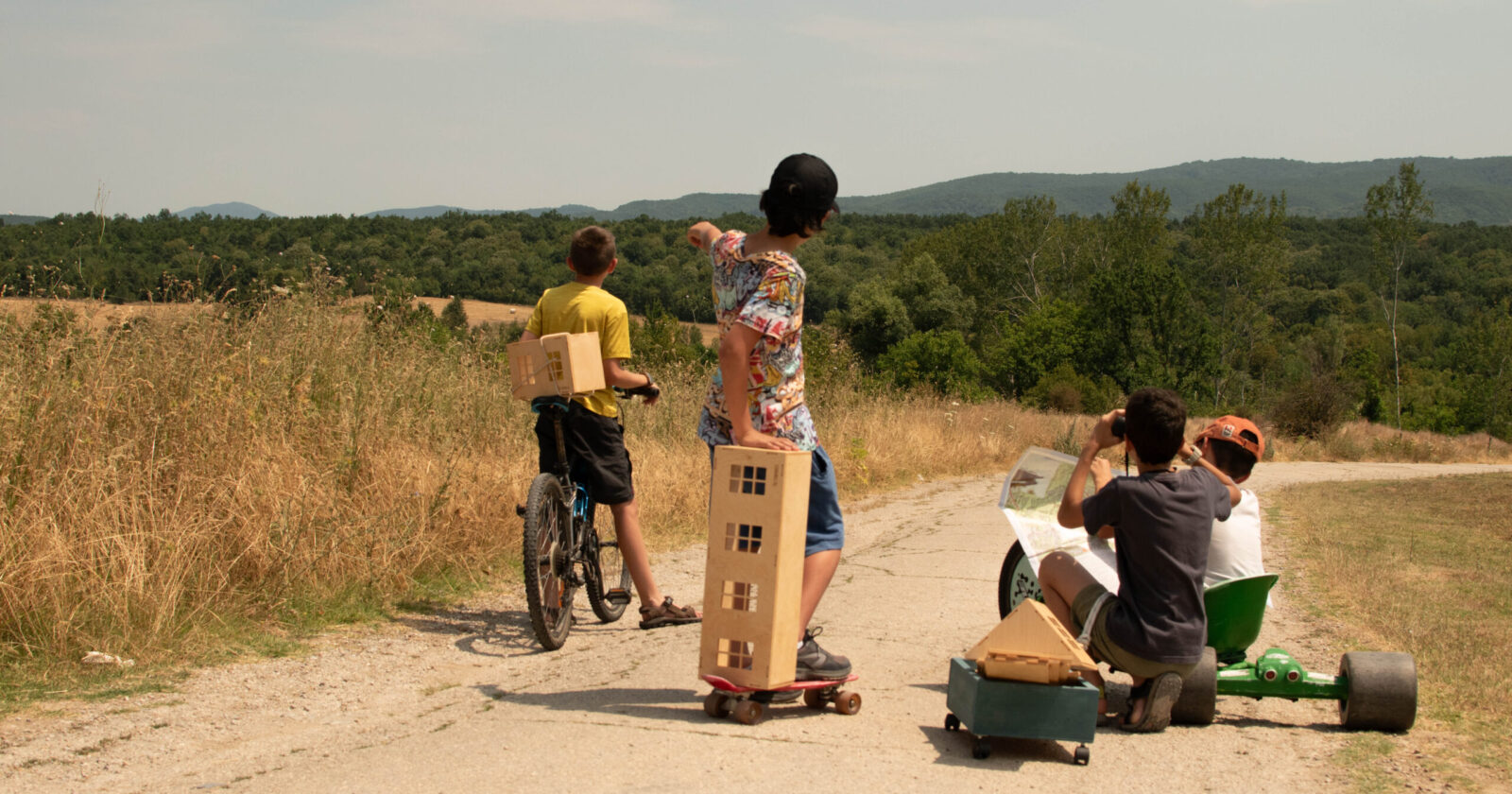
Let’s talk about something that might feel a bit unconventional: boys and dollhouses.
I know what you might be thinking. Walk through any toy shop and you’ll likely find dollhouses nestled in the “girls’ section” – all pastel colours and floral details. But here’s what I’ve learned from watching children play: when you look past the packaging and the marketing, what you actually have is an open-ended play structure. A blank canvas. A world waiting to be shaped by imagination.
And boys? They need this kind of play just as much as anyone.
Whether your son wants to create a fire station, a dinosaur museum, a busy café, or a garage for his entire vehicle collection, a dollhouse offers him the chance to explore, create, and grow in ways that are often overlooked in “typical” boys’ toys.
So let me share why I believe every boy deserves the opportunity to play with a dollhouse – not because we’re making a statement, but simply because it makes beautiful sense.
It’s Not a House – It’s a Whole World
Here’s the thing: boys don’t see dollhouses the way marketing departments do. They see potential.
That three-storey structure? It’s a police headquarters. A veterinary hospital. A pizza restaurant with a dragon living upstairs. A space station. A castle. A car repair shop. Whatever their imagination needs it to be that day.
When you give your son a dollhouse, you’re not handing him a domestic scene to recreate – you’re giving him a stage for any story he wants to tell. The structure is just the beginning. What he does with it is entirely his own.
I’ve watched boys transform these spaces in the most creative ways. The “bedrooms” become different departments of a fire station. The “kitchen” becomes a laboratory. The whole thing becomes a multi-level car park, complete with ramps fashioned from cardboard.
This is what open-ended play looks like – and it’s exactly what growing minds need.
Stories That Build Language and Thought
Watch your son play with a dollhouse and you’re watching a storyteller at work.
Whether he’s narrating a rescue mission from the top floor, creating a busy morning at a train station, or working through what happened at school yesterday, he’s building narratives. He’s developing characters. He’s creating dialogue and exploring how stories unfold.
This kind of pretend play supports language development in profound ways. He’s practising vocabulary, sentence structure, storytelling sequences – all whilst completely absorbed in play. The learning is invisible to him, but it’s happening with every scenario he creates.
And here’s something important: boys often get less opportunity for this kind of narrative play. So much of what’s marketed to them focuses on action rather than story, on winning rather than exploring. A dollhouse gives him space to slow down and really develop ideas.
Building Empathy Through Small Moments
When your son acts out scenes in his dollhouse – helping an injured animal at the vet, comforting a scared character, running a restaurant and making sure everyone gets fed – he’s building emotional awareness.
He’s learning to see life through someone else’s eyes. To imagine how others feel. To care about outcomes beyond his own experience.
These are quiet skills that don’t get celebrated as much as physical bravery or academic achievement. But they’re the skills that grow into emotionally intelligent men. Men who can nurture. Men who can connect. Men who are comfortable with the full range of human experience.
Through pretend play, boys can try on different roles without judgment. They can be caregivers, helpers, organisers, nurturers – all the things they might not see modelled as “boy” activities but that are simply human activities.
Design Thinking Starts Here
There’s real cognitive work happening when your son rearranges furniture, plans room layouts, decides which spaces connect to which, or figures out how to make a lift from cardboard and string.
He’s learning about spatial relationships. About balance and proportion. About how design choices affect function. About problem-solving through trial and error.
These are the foundations of architectural thinking, of engineering, of any creative work that involves space and structure. And he’s building these skills whilst playing – which means he’s building them joyfully, without pressure, in a way that will stick.
Exploring How the World Works
Boys are often fascinated by systems – how things work, who does what, how all the pieces fit together.
A dollhouse becomes the perfect place to explore these questions in miniature:
- Running a post office and figuring out deliveries
- Operating a train station with schedules and destinations
- Managing a busy shop with customers and stock
- Organising a hospital with different departments
- Building a city with connecting buildings and infrastructure
Through this play, he’s not just playing – he’s exploring careers, systems, community roles, and how society functions. He’s asking big questions about the adult world in a child-sized, manageable way.
Learning to Play With Others
When siblings or friends gather around a dollhouse, something wonderful happens: they have to negotiate.
Whose character does what? What happens next in the story? Can the fire engine really park in the living room? Should this be a school or a spaceship today?
Boys get to practise:
- Taking turns and sharing space
- Contributing ideas and listening to others
- Compromising when visions differ
- Building collaborative stories
- Navigating disagreements constructively
These social skills are crucial, and they develop naturally through shared play. The dollhouse becomes common ground where different ideas can coexist and merge into something none of them would have created alone.
A Safe Place for Big Feelings
Here’s something we don’t talk about enough: it can be hard for boys to express emotions, especially if they’ve already absorbed messages that feelings should be hidden or that certain emotions aren’t “manly.”
Through dollhouse play, boys can work through things that feel too big to talk about directly:
- A new sibling arriving and changing everything
- Moving house and leaving friends behind
- Feeling scared about starting school
- Processing something confusing that happened
- Experimenting with being brave, gentle, scared, silly – the full range
The play characters can feel all the things he’s feeling. They can work through problems he’s facing. And because it’s “just play,” it feels safe. There’s distance. There’s control. He can try out different endings, different responses, different ways of being.
This is genuinely therapeutic play, and every child deserves access to it.
Fine Motor Skills in Disguise
All those small actions involved in dollhouse play – opening tiny doors, positioning play figures, arranging miniature furniture, handling small accessories – are brilliant for developing fine motor control.
For boys who might not naturally gravitate toward drawing, colouring, or craft activities, dollhouse play sneaks in this important motor skill practice in a way that feels like pure fun rather than work.
Those small hand movements, that gentle manipulation of tiny objects, that careful placement – it’s all building dexterity and control that will serve him in writing, in sports, in any task requiring precision.
No Rules, Just Possibilities
There’s something liberating about play that doesn’t come with instructions.
No batteries needed. No levels to complete. No right way to do it. A dollhouse invites a different pace of play – slower, deeper, more exploratory.
Today it’s a garage. Tomorrow it’s a school. Next week it’s something he hasn’t even imagined yet. The possibilities stretch as far as his ideas, and the play can be as simple or complex as he needs it to be on any given day.
In a world where so much of childhood is scheduled, structured, and screen-based, this kind of open-ended play is increasingly rare – and increasingly valuable.
Because Boys Deserve to Be Whole
Here’s the heart of it: boys should never be limited by narrow ideas about what they’re “supposed” to enjoy.
They can be gentle. They can nurture. They can create homes and cafés and hospitals. They can care for babies and rescue kittens and arrange flowers and fix broken stairs – sometimes all in the same play session.
A dollhouse lets them try on every side of life. It gives them permission to be complex, multifaceted, fully human. And that’s exactly what we should want for them – the freedom to explore all of who they might become, not just the parts that fit outdated stereotypes.
When we give boys access to nurturing play, creative play, domestic play, community-focused play – we’re not trying to change who they are. We’re simply letting them be complete.
A Word From My Heart
I’ve watched my own son transform a wooden dollhouse into a post office one day, a veterinary clinic the next, then a three-storey burger restaurant with a dragon living in the attic. And I can tell you this: he wasn’t trying to prove anything or be anyone but himself. He was simply learning, growing, imagining, and being exactly the kind of boy he is.
Some days his play is all action and adventure. Other days it’s quiet and domestic. Most days it’s a wild mixture of both. And all of it matters. All of it is helping him understand himself and the world.
The best thing I ever did was pull up a chair beside him and ask, “What’s happening in your city today?” The stories he told me – the complexity, the care, the creativity – took my breath away.
Let’s Widen Childhood
If your son gravitates toward a dollhouse, don’t redirect him. Don’t worry about what it means. Don’t let outdated ideas about “boys’ toys” and “girls’ toys” limit his play world.
Instead, support his interest. Ask about his stories. Help him create additions. Watch what unfolds.
Childhood should be wide open, not colour-coded. Every child – regardless of gender – deserves access to nurturing play, creative play, storytelling play. They deserve tools for processing emotions, building empathy, exploring community, and understanding the full spectrum of human experience.
A dollhouse isn’t a girls’ toy any more than building blocks are a boys’ toy. They’re just tools for imagination. And imagination belongs to everyone.
So if you’re wondering whether your son would enjoy a dollhouse – or if he’s already shown interest but you’ve hesitated – I encourage you to take the leap. Give him the space, the structure, and the freedom to create his own worlds.
You might be amazed at what he builds there.
Bobby