

What if they’re already showing us?
September arrives and with it, that familiar pull back towards structure. Summer was loose and forgiving — late mornings, bare feet, no particular place to be. And now, suddenly, everything needs a shape again. Breakfast at a certain time. Shoes on. Teeth brushed. Out the door.
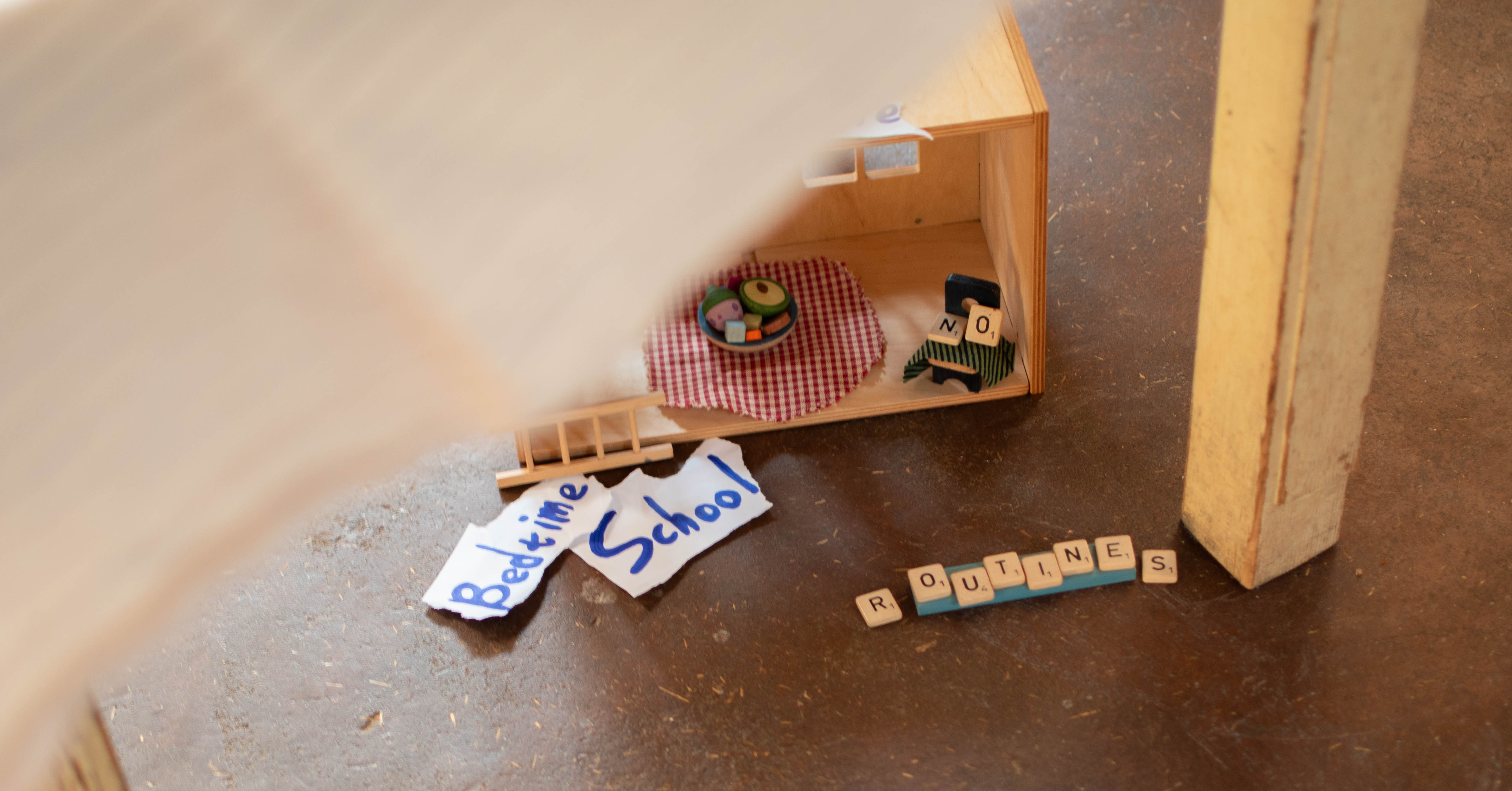
This is where dollhouse play changes everything. Not structured, adult-led play with a learning objective pinned to it. Just play. The kind where a child is in charge of a small world and gets to decide what happens, when, and to whom. And if we step back and watch that play closely, we might find they’re already telling us everything we need to know.
What morning looks like through their eyes
A dollhouse morning scene can be surprisingly powerful. Not because you set it up and say “look, this is what we do in the mornings.” That would just be a routine delivered through a toy, and children see straight through it. But because when a child has a bedroom in their dollhouse, a little kitchen, maybe a tiny table — they naturally play out morning sequences. Things happen because the child is telling a story, and stories need a beginning.
And if we watch from a distance, maybe we’ll notice a better rhythm for their day — something they are asking for with no words, something they have played over and over, something that perhaps they need in their own mornings. So maybe they can have a story read during breakfast. Get dressed just before leaving the house. Brush teeth while dancing to their favourite song.
Their morning rhythm could be completely different from our own 🙂
What bedtime feels like
Bedtime is the other one. It carries more emotional weight than mornings because it involves separation — the child moving away from the people they want to be near, into a dark room, alone. No amount of explaining that sleep is important will make that feel easier.
But playing bedtime in the middle of the day? That’s a different thing entirely. There’s no pressure. Nobody is actually going to bed. The child can put their little figure to sleep, tuck them in, read them a story, check under the bed, turn the light off and on again three times — whatever they need to do. They’re processing the feelings that bedtime brings up, safely, at a time when they feel in control.
And if you watch, you might see — the figure who doesn’t want to sleep, the one who keeps calling for their mum, the one who needs the door left open. It’s not always a direct copy of what happens at home. Sometimes it’s the child working through what bedtime feels like, which is far more useful than rehearsing what bedtime looks like.
Handing it over
A dollhouse is a small, safe world where daily life can be explored, rearranged, played with, and understood — on their terms, at their pace, in their own way.
The child who spends twenty minutes putting all the dollhouse figures to bed and then waking them up again isn’t wasting time. They’re making sense of the thing that happens to them every single day. They’re building understanding of sequence, of cause and effect, of what it feels like to move through a day. And they’re doing it freely, without being told how.
September is a month of finding your feet again. Of gently nudging things back into place after the freedom of summer. If your child is struggling with the shift — and most children do — know that you don’t have to push harder. Sometimes the gentlest way to build a routine is to hand it over to a small wooden world and let your child find the rhythm themselves.
Bobby x